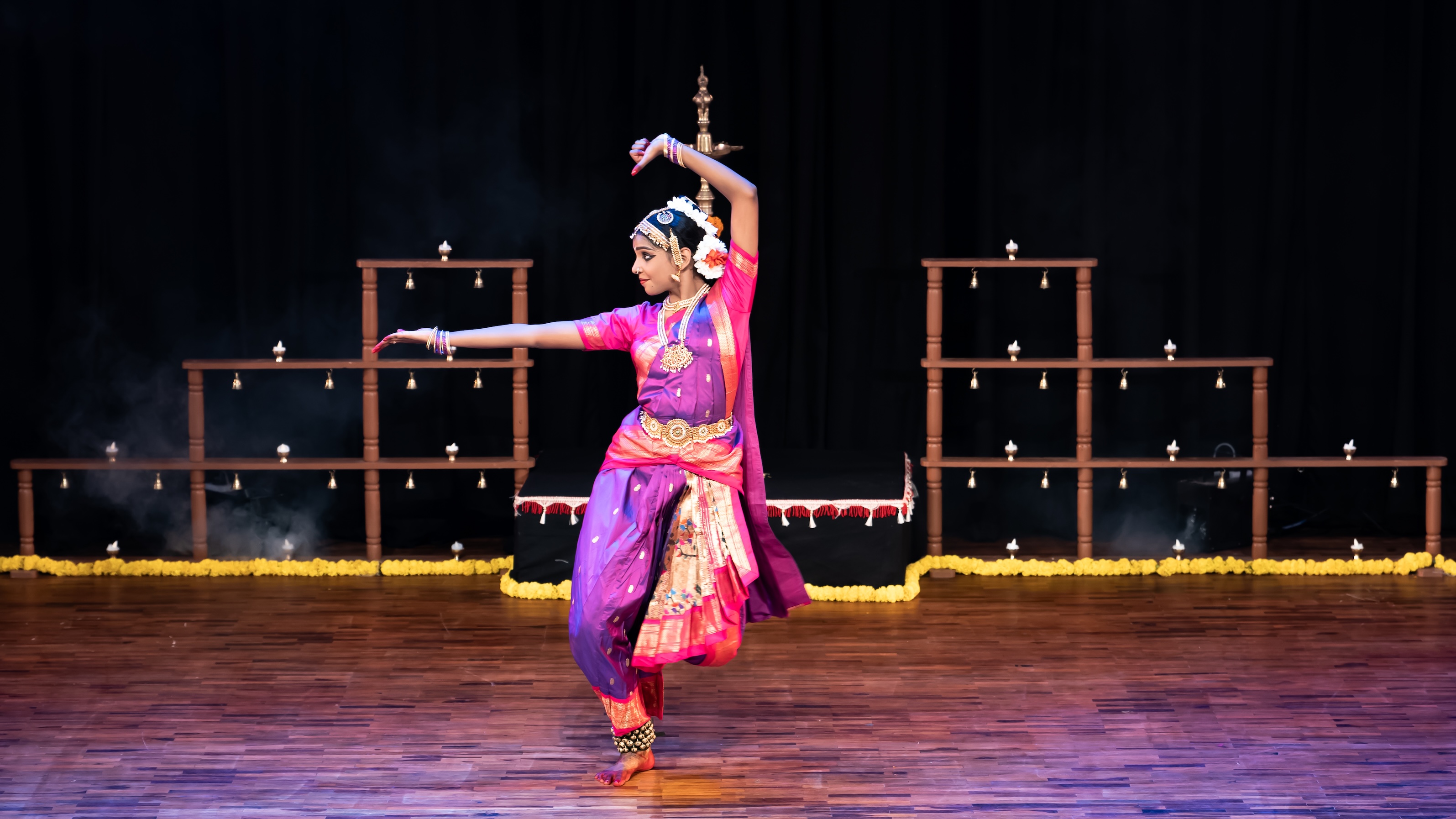
From Beginner to Arangetram: The Complete Bharatanatyam Roadmap
In Bharatanatyam, Arangetram is not just reaching the stage. It is becoming the person who earned it.
Every accomplished Bharatanatyam dancer once began in the same place: awkward first steps. Tired legs. Forgotten counts. Nervous smiles.
Then, over years of training, something remarkable happens. Discipline becomes grace. Practice becomes confidence. Basics become artistry.
For many students, this long journey reaches a beautiful milestone called Arangetram — the first full solo stage presentation after years of structured learning. But what does the road from beginner to Arangetram actually look like?
If you are a student or parent starting out, here is a clear roadmap.
The beginner foundation 🪷
The first year is rarely glamorous — but it is essential. Many beginners worry they are progressing slowly. In reality, this stage builds the base for everything that follows.
Focus areas
- Posture and alignment
- Araimandi stance
- Basic adavus
- Rhythm counting
- Hand & foot coordination
- Discipline in class habits
What success looks like
- Better balance
- Stronger stamina
- Cleaner basics
- Confidence entering class
Building technique & consistency
Once fundamentals settle, students begin growing faster. This is when regular home practice becomes powerful — students who stay consistent often accelerate noticeably.
Training expands to
- More adavu variations
- Sharper footwork
- Improved hand gestures
- Better rhythm precision
- Simple combinations
- Introductory abhinaya (expression)
Common challenge: plateaus — progress feels slower than expected. This is normal growth, not failure.
Performance readiness & expression
At this level, the dancer begins looking less like a student and more like a performer. Recitals, school events, temple programs, and academy showcases build confidence under public attention.
Focus shifts toward
- Strong stage presence
- Musical sensitivity
- Facial expressions
- Emotional storytelling
- Longer items
- Endurance and polish
Pre-Arangetram preparation
Arangetram is not simply scheduled by age. It is considered when teacher and student feel genuine readiness. A wise guru values preparedness over speed.
Readiness signs
- Strong basics under pressure
- Ability to sustain a full programme
- Mature abhinaya
- Reliable discipline
- Consistent attendance
- Emotional readiness for responsibility
Years made visible in one evening
This phase can be intense, meaningful, and unforgettable. Families often discover that Arangetram is not one evening — it is years of work becoming visible.
Preparation includes
- Extra rehearsals
- Full repertoire practice
- Costume and music coordination
- Stamina training
- Mental preparation
- Stage rehearsal
What students learn beyond dance
The Bharatanatyam path develops much more than performance skills. Students often gain discipline, patience, confidence, respect for tradition, time management, resilience, and cultural understanding. Many of these qualities become lifelong assets.
Common mistakes families make
- Rushing the timeline — trying to reach Arangetram too early weakens foundations
- Comparing with others — every child’s pace differs
- Focusing only on events — the training journey matters more than the social milestone
- Ignoring joy — progress without joy quietly fades
A practical roadmap for parents
- Year 1–2: encourage attendance and routine
- Year 3–4: support consistent practice and small confidence-building performances
- Year 5+: trust the teacher’s guidance regarding readiness and next steps
- Always: protect balance with school, rest, and emotional well-being
What if progress feels slow?
Many students believe others are moving faster. But classical arts reward depth more than speed. Some dancers bloom early; others bloom brilliantly later. Consistency often beats early talent.
The final takeaway
What is the complete Bharatanatyam roadmap from beginner to Arangetram? It is not a shortcut. It is not a race. It is not one performance date.
It is years of small disciplined steps leading to visible grace. From first posture to final bow, the student is transformed.
Because in Bharatanatyam, Arangetram is not just reaching the stage. It is becoming the person who earned it.